Photoaging of the skin – symptoms, risk factors and prevention including the use of SPF creams

Modern dermatology and cosmetology devote a lot of attention to the phenomenon of photoaging, considering it one of the key health and aesthetic problems of the skin. Long-term exposure to ultraviolet radiation leads to profound structural and functional changes in the skin that are different from the effects of normal aging.

What are the symptoms of skin photoaging?

Photoaging is revealed through a series of characteristic changes that go beyond the natural chronological aging processes. The most important symptoms include: 

  1. 1.Deep, fixed wrinkles: Expression lines deepen, new furrows appear, especially on the cheeks, forehead and around the mouth. 

  1. 2.Loss of skin firmness and elasticity: The skin becomes flabby, drooping, it is more difficult to return to its original shape, which is associated with the degradation of collagen and elastin. 

  1. 3.Hyperpigmentation and lentigines (senile): Irregular, darker spots appear on the face, décolleté or dorsal surfaces of the hands, caused by excessive melanin production after exposure to the sun. 

  1. 4.Hyperpigmentation, discoloration: The skin may have an uneven tone, local discoloration, and light spots (hypopigmentation). 

  1. 5.Telangiectasias: Widen, persistent blood vessels, often visible on the cheeks and nose, have a "spider veins" effect. 

  1. 6.Skin roughness and dryness: Skin affected by photoaging loses its natural glow, becomes rough, flaky, and prone to irritation. 

  1. 7.Thinning of the epidermis: A reduction in the thickness of the epidermis leads to greater sensitivity and susceptibility to injury. 

  1. 8.Precancerous and neoplastic lesions: Actinic keratosis is characteristic, and in advanced cases – skin cancer, most often in places most exposed to the sun.

What factors increase the risk of photoaging

The rate and intensity of photoaging are influenced by many factors, some of which can be modified: 

  1. 1.Frequent and prolonged exposure to the sun without protection – the most important risk factor. 2.Regular exposure to the skin, especially during peak UV hours, significantly accelerates the aging process of the skin. 

  1. 3.Not using SPF creams or using them irregularly, in too small amounts, or only on sunny days. Unprotected skin is susceptible to the harmful effects of both UVB and UVA all year round. 

  1. 4.Fair complexion, freckles, tendency to sunburn: People with phototypes I and II (according to the Fitzpatrick scale) have less melanin that protects against UV radiation, so their skin is photodamaged faster. 

  1. 5.Age: Over the years, the skin's repair mechanisms weaken and the effects of chronic radiation exposure accumulate. 

  1. 6.Use of medicines and photosensitisers: Certain antibiotics, hormonal agents, herbs (e.g. St. John's wort), cosmetics or perfumes can increase the sensitivity of the skin to UV radiation. 

  1. 7.Use of tanning beds and UV lamps: Artificial sources of UV radiation, even in short bursts, can have a similarly negative effect as the sun. 

  1. 8.Environmental pollution, smog: Compounds present in the air increase oxidative stress, exacerbating the effects of UV radiation. 

  1. 9.Poor skin care: Too much exfoliation, lack of hydration and lipid protection of the skin barrier contribute to weakening of the skin to external factors.

How to protect the skin against photoaging?

The most effective method of preventing photoaging is consistent and conscious UV protection throughout the year, regardless of the weather and season. SPF creams play a key role in this: 

  1. Choosing a sunscreen with the right SPF: An SPF of at least 30 is recommended, especially in summer, in the mountains or by the water. In the case of people with very fair skin and children, it is worth reaching for products with SPF 50 and more. 

  1. Broad-spectrum protection: Modern creams should protect against both UVB and UVA radiation ("broad spectrum" marking or the UVA symbol in a circle on the packaging). 

  1. Correct application: The cream should be applied to the skin at least 20 minutes before sun exposure, in an amount equivalent to approx. 2 mg/cm² of the skin (using less significantly reduces the effectiveness of protection). 

  1. Regular reapplication: Sunscreen should be reapplied every 2-3 hours, especially after bathing, heavy sweating or towel-drying. 

  1. Use all year round: SPF creams should be applied every dayalso in winter and on cloudy days, because UVA radiation penetrates clouds and windows. 

  1. Complementary protective measures: Wearing hats, sunglasses with UV protection and long-sleeved clothing significantly increases the effectiveness of SPF protection. 

  1. Protection of children and the elderly: In children and seniors, whose skin is particularly sensitive to radiation, the use of sunscreen should be rigorous and regular. 

  • Avoid exposure during peak UV hours: Even when using sunscreen, it is a good idea to limit exposure to the sun between 10:00 and 16:00. 

Other activities are also important in the prevention of photoaging, such as: 

  1. Maintaining the skin's moisture level (using moisturizing creams) 

  1. Inclusion of antioxidant cosmetics in the care (vitamin C, E, coenzyme Q10, polyphenols) 

  1. A proper diet rich in antioxidants, regular hydration 

  1. Avoiding irritants and contaminants 

The use of creams with SPF is the foundation of prevention and should be a skincare habit every day, regardless of age, gender and skin type. This makes it possible to significantly delay the appearance of photoaging symptoms, improve the condition of the skin and reduce the risk of developing skin diseases related to UV radiation. 

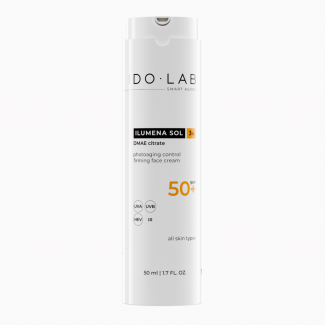
A special example of a modern product supporting the prevention of photoaging is the ILUMENA SOL SPF 50+ cream, whichthanks to the use of advanced, photostable chemical filtersprovides a very high protective barrier against the full spectrum of UVA, UVB and blue light (HEV) radiation. Thus, it effectively counteracts the destructive effect of radiation on the skin structures, reducing the formation of deep wrinkles, discoloration and loss of firmness. The presence of gluconolactone strengthens the epidermal barrier, has a soothing and moisturizing effect, supporting the regeneration of skin exposed to photodamage, while 3% DMAE Citrate improves elasticity and smoothes wrinkles, providing an additional firming effect. The light, non-bleaching formula of the cream is conducive to regular usealso as a make-up basewhich is crucial for daily and effective photoaging prevention, reducing the appearance of signs of skin aging and prolonging its youthful appearance. 

Summary:

Photoaging of the skin is a process of accelerated aging caused by UV radiation, manifested by, m.in others, deep wrinkles, loss of firmness, discoloration, discoloration, telangiectasias and dry skin. The risk of photoaging is increased by frequent exposure to the sun without protection, fair complexion, age, certain medications, the use of tanning beds, environmental pollutants and improper care. The key method of prevention is the daily use of creams with broad spectrum SPF protection, proper application and regular reapplicationsregardless of the season. In addition, moisturizing and antioxidant care, a healthy diet and avoiding irritants are recommended. An example of modern protection is the ILUMENA SOL SPF 50+ cream, which effectively protects the skin against the harmful effects of radiation and supports its regeneration, helping to maintain a healthy and youthful appearance for a longer period of time.

Frequently Asked Questions (FAQs) about Photoaging and SPF Protection

  • What is photoaging of the skin? 

  • Photoaging is a process of premature skin aging caused by long-term exposure to UV radiation, manifested by wrinkles, discoloration, loss of firmness and other structural changes. 

  • Why does solar radiation have such a significant impact on skin aging? 

  • UV radiation damages collagen and elastin fibers, leading to loss of elasticity, wrinkles and discoloration. In addition, it causes the so-called oxidative stress, which accelerates degenerative processes in the skin. 

  • Should sunscreen be used only in summer and on sunny days? 

  • No – UVA radiation penetrates clouds and windows, so SPF creams should be used every day, regardless of the season or weather. 

  • From what age is it worth using products with SPF? 

  • Sun protection is recommended at any ageboth in children, adolescents and adults, because the damage accumulates over the years. 

  • Is it enough to apply sunscreen in the morning? 

  • No – the effectiveness of sunscreen requires reapplication every 2-3 hours, as well as after swimming, sweating or towel-drying. 

  • How to choose the right SPF for your skin? 

  • People with fair skin, children and people with special sensitivity are recommended SPF 50+, in other cases SPF 30 is recommended. It is also crucial that the cream protects against both UVB and UVA. 

  • Does using sunscreen makeup provide full protection? 

  • Makeup with SPF can complement protection, but it will not replace a high SPF cream applied in the right amount to the entire face and other exposed parts of the body. 

  • What other measures, apart from SPF, should be implemented in the prevention of photoaging? 

  • It is recommended to regularly moisturize the skin, use antioxidants (e.g. vitamins C and E), eat a healthy diet, avoid exposure during peak UV hours, wear glasses and hats, and limit exposure to environmental pollutants. 

  • Should people with dark skin also use sunscreen? 

  • Yesalthough darker skin contains more melanin and is naturally better protected, it also undergoes photoaging and is at risk of developing cancerous lesions. Therefore, SPF protection is important for all skin types. 

  • Can SPF creams be used in children and the elderly? 

  • Definitely yes – the skin of children and seniors is particularly sensitive, so it requires regular and careful sun protection. 

Sources of information

  1.  Gilchrest B.A., Krutmann J. (red.): Skin Aging, Springer, 2006. 

  1.  Draelos Z.D.: Cosmetic Dermatology: Products and Procedures, Wiley-Blackwell, 2015. 

  1.  Oresajo C., Pillai S., Yatskayer M., Manco M.: Anti-aging mechanisms of skin care ingredients, Journal of Dermatological Science, 58(2), 2009. 

  1.  Narbutt J., Lesiak A.: Photoaging of the skin – mechanisms and prevention, Przegląd Dermatologiczny 2016; 103(4): 275-282. 

  1.  Krajewska-Kułak E., Łukaszuk C., Niczyporuk W.: Prevention of photoaging of the skin – the role of sunscreens, Dermatologia Estetyczna, 2017; 19(1): 23-29. 

  1.  Król E., Słowińska M.: Modern sunscreensmechanisms of action and safety of use, Dermatology after Graduation, 2020; 11(2): 30-36. 

  1.  Bruls W.A.G., van Weelden H., van der Leun J.C.: Transmission of UV radiation through human epidermal layers as a function of wavelength, Photochemistry and Photobiology, 1984; 40(4): 485-494. 

  1.  Szymańska J., Dębowska J.: The role of diet and antioxidants in the prevention of skin photodamage, Aesthetic Cosmetology, 2018; 7(4): 336-342. 

  1. Wójcik M., Rudnicka L.: Skin agingrisk factors, prevention and treatment, Advances in Dermatology and Allergology, 2019; 36(6): 687-697. 

  1.  ClinicalTrials.gov: Safety and Effectiveness of DMAE Citrate in Skin Care, dostęp 05.08.2025. 

Product added to wishlist