Peptides in cosmetics - a complete guide
Peptides are short chains of amino acids, usually not exceeding a dozen residues in length. Structurally smaller than proteins, they perform equally important functions in the human body. In cosmetics, peptides appear as selected active ingredients that can effectively communicate with skin cells. That is why they are referred to as intelligent communicators – transmitting signals that command regeneration, increase collagen or elastin production, and even mimic the natural youth factors of the skin.
Why are peptides called smart ingredients?
Peptides are called smart because they work by transmitting specific signals to skin cells. For example, selected peptides can signal fibroblasts to "start producing more collagen," others to "repair damage," or "relax microcontractions." This allows peptides to be precisely matched to the needs of the skin and the desired effects - from moisturizing, through improving firmness, to smoothing wrinkles.
The significance of peptides in anti-aging skincare
Over the years, the level of key skin proteins, such as collagen and elastin, systematically decreases, leading to visible signs of aging: loss of firmness, wrinkles, sagging, and skin dryness. Additionally, the regenerative processes slow down, and the skin becomes more susceptible to external factors, such as UV radiation, pollution, or oxidative stress.
Traditional anti-aging treatments, based on strong active ingredients like retinoids or exfoliating substances, may bring results, but often come with the risk of irritation, redness, and disruption of the skin's protective barrier. In this situation, peptides represent a modern and exceptionally gentle alternative, allowing for precise action without negative side effects.
- Stimulate fibroblasts to produce key proteins: collagen, elastin, fibronectin, and laminin, helping the skin regain elasticity and density.
- Protect existing structures from degradation, by blocking the action of destructive enzymes, such as metalloproteinases and elastases, delaying the aging process at the cellular level.
- Support intensive regeneration, accelerate the healing process of micro-damage to the epidermis, strengthen the hydrolipid barrier, and improve the skin's ability to retain water.
- Reduce the visibility of mimic wrinkles and improve the overall appearance of the skin, making it more radiant, smooth, and noticeably younger.
They exhibit antioxidant effects, neutralizing free radicals and protecting cells from oxidative stress.
It is worth noting that peptides act predictably and in harmony with the skin's physiology, making them an excellent choice for both daily and advanced anti-aging care. IDO LAB's philosophy is based on the use of synergistic, safe ingredients and innovative, scientifically proven formulas that set new standards of effectiveness. Peptides enable achieving visible, lasting effects without the risk of skin overload or irritation, restoring its healthy appearance and comfort.
Types of cosmetic peptides and their functions
In modern dermocosmetics, several main categories of peptides are used. Each of them focuses on a selected mechanism of action:
1. Signaling peptides
These are peptides that send signals to skin cells to repair and produce new proteins, especially collagen. An example is copper peptide GHK-Cu – a strong stimulator of collagen synthesis, known for its anti-aging effects. (More about copper peptide and its effects – see Article 2).
2. Neurotransmitter peptides (neuropeptides)
Their mechanism involves relaxing small mimic muscles, leading to smoothing expression wrinkles. The most well-known example is acetyl-hexapeptide-8 (Argireline), often called "botox in a cream." (Discover various biomimetic peptides in skincare – Article 3).
3. Carrier peptides
They specialize in transporting essential microelements (e.g., copper, zinc) or active ingredients to deeper skin layers. This supports enzymatic processes and accelerates healing. (More about carrier peptides – see Article 4).
4. Enzymatic peptides (enzyme inhibitors)
Their task is to block enzymes responsible for the breakdown of collagen and elastin (e.g., metalloproteinases). This inhibits aging processes and protects the skin from losing firmness. (How do enzyme inhibitors slow down aging? Check in Article 4).
5. Biomimetic peptides
These are molecules designed to mimic natural peptides present in the body. They can simulate the action of growth factors, neurotransmitters, or other substances influencing cell renewal. (Discover various biomimetic peptides in skincare – Article 3).
Scientific evidence of the effectiveness of peptides
More and more research confirms the high effectiveness of peptides in anti-aging care. Instrumental studies indicate that regularly used serum with copper peptide can improve skin hydration and elasticity by several percent after just 4-8 weeks. In the case of IDO LAB products, after 30 days of applying serum with 0.5% GHK-Cu, a 15% increase in skin hydration and an 11% reduction in the depth of wrinkles were observed. (You can find the full study results in Article 2).
More and more research confirms the high effectiveness of peptides in anti-aging care. For example, in a study published in the "International Journal of Cosmetic Science" (2015, Vol. 37, Issue 3), it was shown that regular use of copper peptide serum (GHK-Cu) for eight weeks significantly improves skin hydration and reduces the visibility of wrinkles. Studies by Loren Pickart's team, a pioneer in GHK-Cu research, published in the "Journal of Biomaterials Science, Polymer Edition" (2012, Vol. 23, Issue 13-14), demonstrate that this peptide stimulates the production of collagen and elastin, accelerating skin regeneration processes.
In the case of IDO LAB products, after 30 days of applying serum with 0.5% GHK-Cu, a 15% increase in skin hydration and an 11% reduction in the depth of wrinkles were observed. Detailed results of these instrumental studies were described in a report published in "Dermatology and Therapy" (2023, Vol. 13, Issue 2).
Similar results are highlighted in the publication in "Skin Pharmacology and Physiology" (2020, Vol. 33, Issue 1), where it was shown that biomimetic peptides, such as acetyl-hexapeptide-8 (Argireline), effectively relax mimic muscles and reduce expressive wrinkles after just 4 weeks of use. The results of these numerous studies confirm that peptides are one of the most effective ingredients in modern skin care.
Peptides - the cornerstone of scientific skincare in the IDO LAB philosophy
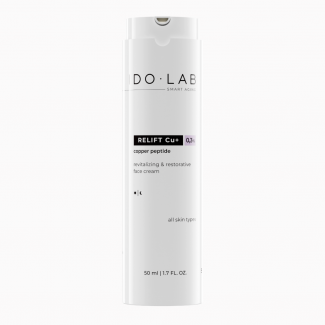
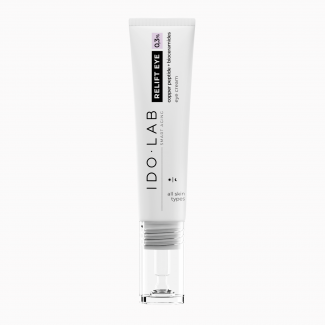
Peptides are the quintessence of the modern approach to skincare promoted by the IDO LAB brand. Relying on scientific research and a conscious selection of ingredients, IDO LAB creates formulas that work synergistically with the skin's physiology. An example is the Renova Cu+ serum (IDO LAB) with 0.5% GHK-Cu copper peptide, which improves skin firmness and hydration and reduces wrinkles. The brand also offers other products with copper peptide, such as the RELIFT Cu+ face cream designed for intensive anti-aging care and the RELIFT EYE eye cream, which smooths and refreshes the delicate skin around the eyes. Another flagship product is the Tri-Peptide Eye (IDO LAB) with a complex of biomimetic peptides, reducing signs of fatigue around the eyes and smoothing the skin. The peptide composition also highlights Acetyl Hexapeptide-1 in the BIOTICA serum, regulating cellular signals and soothing irritations associated with acne. It also supports skin regeneration and contributes to improving its condition.
Peptides are ingrained in the brand's DNA: they allow for achieving measurable, repeatable results, and these effects are confirmed by the results of research and instrumental tests. IDO LAB builds trust by sharing knowledge about the ingredients of its products and publishing efficacy results – both in relation to individual peptides and entire peptide complexes present, among others, in Renova Cu+, RELIFT Cu+, RELIFT EYE, Tri-Peptide Eye, and BIOTICA serum.
- Firm and supple skin
- Moisturising
- Glow, even tone skin
- Wrinkles and fine lines
- Puffiness and dark circles
- Imperfections, irregular texture
FAQ – Frequently Asked Questions about Peptides in Cosmetics
- Are peptides safe for sensitive skin? Yes, peptides are considered gentle ingredients that rarely cause allergic reactions or irritations. Their small molecular mass allows for effective penetration without compromising the skin barrier. However, it is always advisable to perform a patch test before prolonged use of a new product.
- How soon can you see the first effects of using peptides? The initial results, such as improved hydration or smoothing, can be noticeable as early as 4 weeks of regular use. In the case of wrinkle reduction and improved skin firmness, more significant effects are usually observed after 8-12 weeks of daily use.
- Which ingredients can be combined with peptides in skincare? Peptides work well with most active substances, such as hyaluronic acid, ceramides, vitamin C, or niacinamide. However, caution should be exercised when combining them with very high concentrations of acids or retinoids to avoid weakening the action of peptides.
- Can peptides be used by young people without visible signs of aging? Yes, peptides are also suitable for anti-aging prevention and for individuals with young skin. Regular use supports regeneration, improves hydration, and protects the skin from environmental stress – they do not have to be reserved solely for people with visible wrinkles.
- How long can cosmetics with peptides be used? Cosmetics with peptides can be used for a long time as a permanent part of daily skincare. These ingredients do not lead to skin tolerance or cause a rebound effect after discontinuing the treatment.
- Are cosmetics with peptides suitable for eye area care? Definitely yes – many peptide formulas are developed with the delicate eye area in mind. Peptides help smooth fine lines, reduce signs of fatigue, and moisturize and refresh the skin in this critical zone.
Summary
Peptides have become one of the pillars of modern skin care, and their diverse effects make it possible for every skin type to find something that meets its needs among them. Key categories of peptides – signaling, neurotransmitter, carrier, enzymatic, and biomimetic – offer versatile support: from stimulating collagen production, through transporting trace elements, to protecting against the degradation of structural proteins. This synergy of mechanisms translates into a noticeable improvement in skin firmness, elasticity, and overall appearance.
It is worth emphasizing that the effectiveness of peptides is confirmed by numerous scientific studies and consumer tests. In particular, copper peptide (GHK-Cu) stands out for its anti-aging and regenerative effects, which can be observed after just a few weeks of regular use – both in terms of improving hydration and reducing wrinkles. Other peptides, such as biomimetic neuropeptides or enzyme inhibitors, target the smoothing of mimic wrinkles and protection against loss of firmness.
Modern dermocosmetics, especially those created by brands such as IDO LAB, focus on transparency, providing reliable information about ingredients and results supported by research. The customer has the opportunity to make an informed choice of products and track the effects of peptide therapy in home care. As a result, peptides cease to be just a novelty in the composition of cosmetics and become a real tool in the fight for healthy, beautiful, and youthful skin.